

Remember the old days when a site engineer had to physically walk every corner of a construction site just to check if things were going as planned? Sometimes climbing half-built structures, sometimes squinting at layouts from ground level, hoping nothing was missed?
Those days are quickly becoming history.
Construction drones are now doing a lot of the heavy lifting when it comes to monitoring, planning, and managing job sites. Whether you’re handling a mid-size residential project or a large infrastructure job, drones are finding their place on sites of all scales.
Let’s break down exactly what they’re doing out there.
01
Construction Progress Monitoring
Keeping track of whether a project is on schedule used to mean weekly site walks, endless WhatsApp photo updates, and a lot of back-and-forth between the site team and the office. Half the time, by the time someone flagged a problem, it had already snowballed.
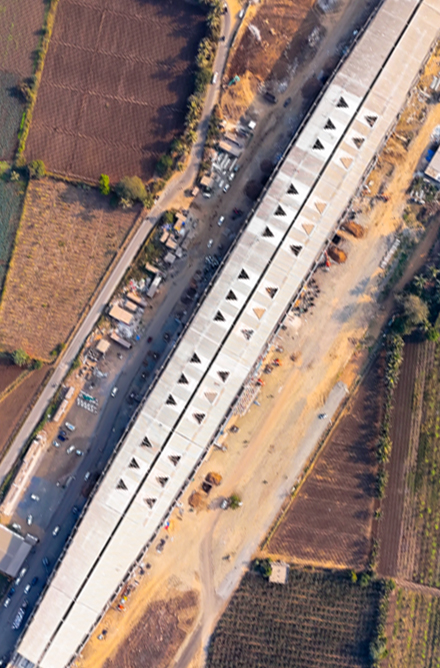
With a drone flying over the site regularly — weekly, fortnightly, or even daily — you get a bird’s-eye view of exactly how much work has been completed. You can compare what’s been done on the ground against your original plan. You can spot delays before they become disasters.
For clients and stakeholders who aren’t always on-site, instead of asking “how’s the project going?”, you can actually show them. Clear aerial footage, timestamped and organised, tells the story better than any report.
“No confusion. No miscommunication. Just visual proof of progress.”
02
Site Surveying and 3D Mapping
Keeping track of whether a project is on schedule used to mean weekly site walks, endless WhatsApp photo updates, and a lot of back-and-forth between the site team and the office. Half the time, by the time someone flagged a problem, it had already snowballed.
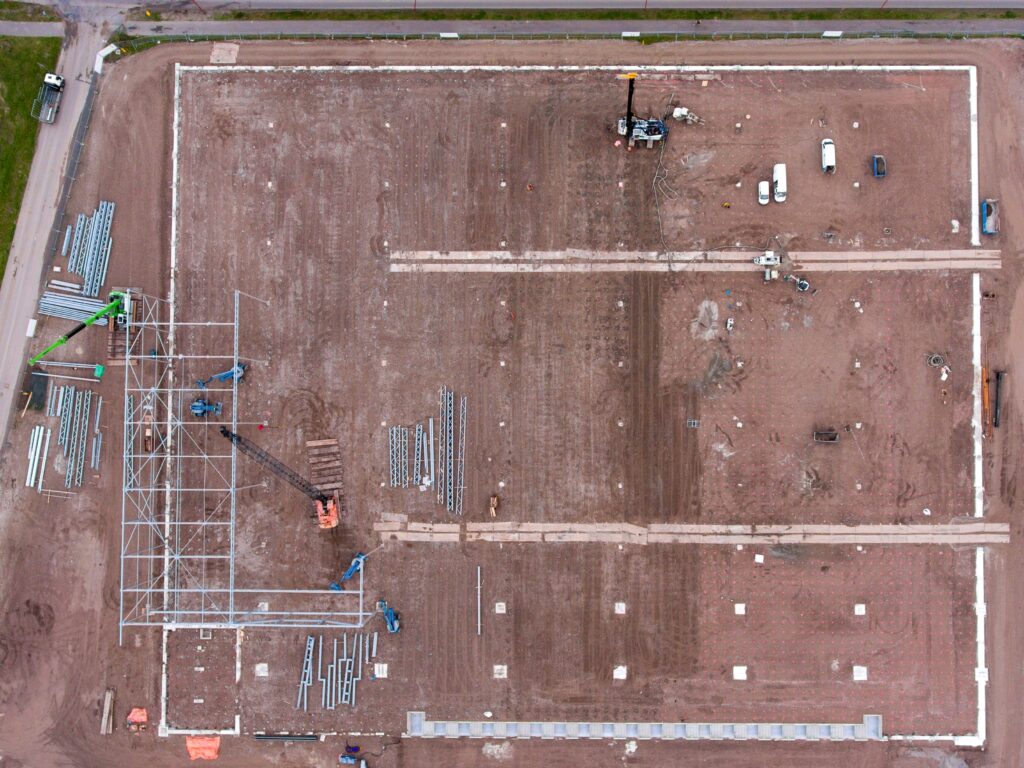
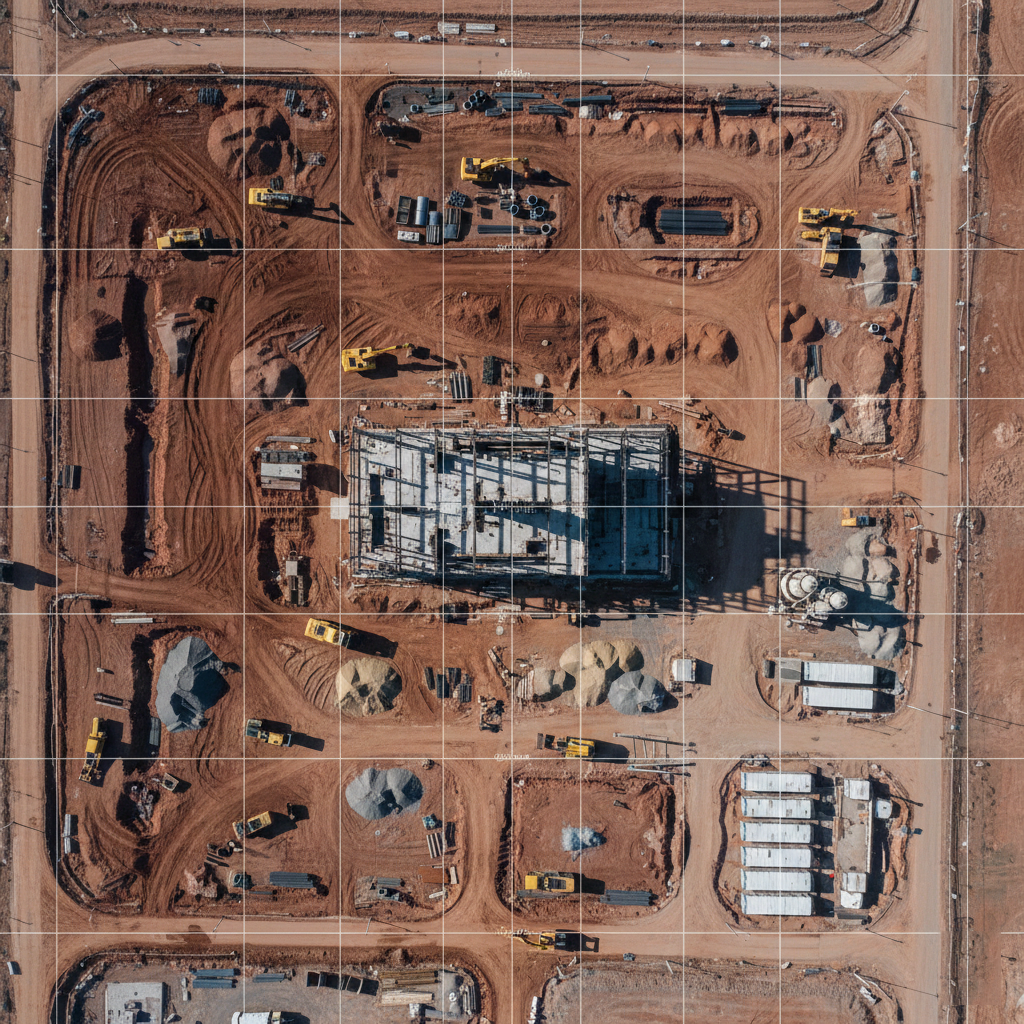
With a drone flying over the site regularly — weekly, fortnightly, or even daily — you get a bird’s-eye view of exactly how much work has been completed. You can compare what’s been done on the ground against your original plan. You can spot delays before they become disasters.
For clients and stakeholders who aren’t always on-site, instead of asking “how’s the project going?”, you can actually show them. Clear aerial footage, timestamped and organised, tells the story better than any report.
03
Measuring Stockpiles
If you’ve ever managed a construction site, you know the headache of material management. How much sand is left? How much gravel has been used? Manually measuring stockpiles is tedious and often inaccurate — you’re basically eyeballing a pile and hoping for the best.
Drones can fly over material stockpiles and, using photogrammetry — a technique that calculates measurements from photographs — give you accurate volume figures. You know exactly what’s on site, where it is, and how long it’ll last.
That means better planning, less wastage, and fewer surprise shortages.
04
Inspections — Without Putting Anyone at Risk
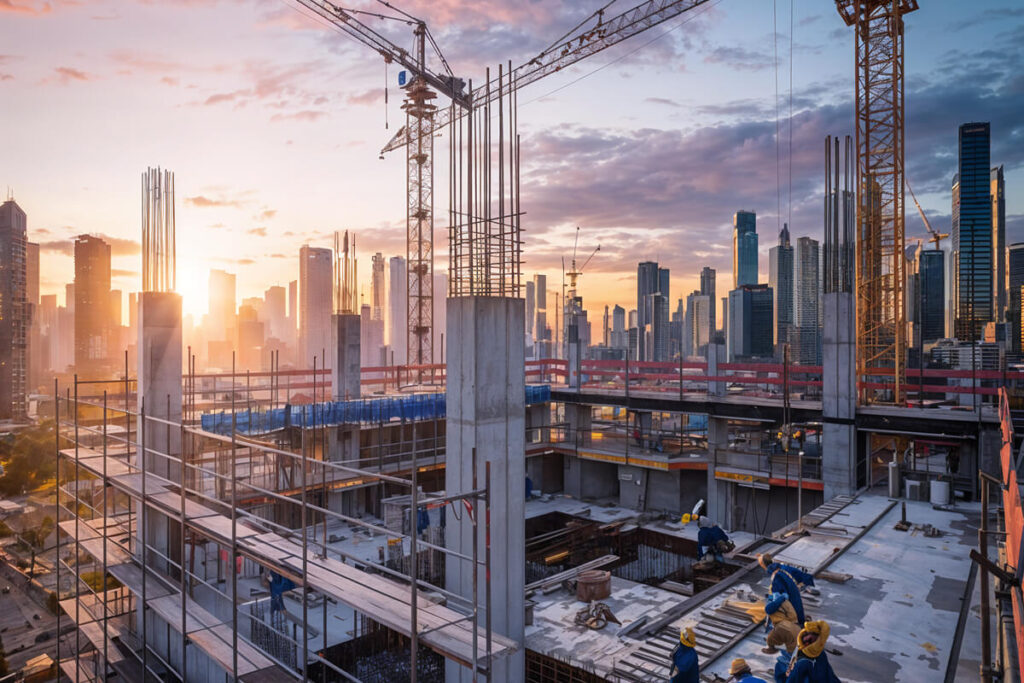
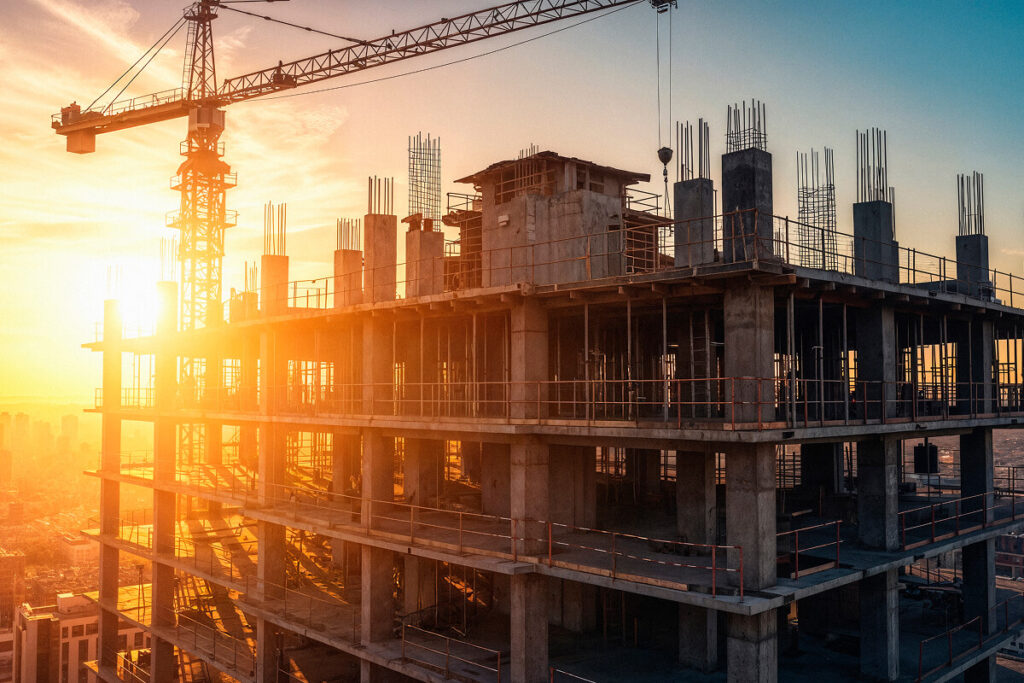
Some parts of a building are dangerous to access during construction. High-rise floors, structural joints at height, newly poured slabs that haven’t cured — sending a worker up there for an inspection carries real risk.
A drone can fly right up to those areas and capture detailed images or video, giving engineers and inspectors everything they need to assess the situation — safely, from the ground.
This also means inspections happen faster and more frequently, because you’re not waiting for safety equipment to be set up or for a team to be assembled.
05
Digital Twins and BIM Integration
A “digital twin” is a virtual replica of your building — a 3D model that gets updated as construction progresses. Drones help create and maintain this model by regularly capturing real-world data from the site.
When your on-ground reality matches your digital design, you can catch misalignments early. If something’s been built slightly off from the plan, you’ll know — before it causes a cascading problem down the line.
For teams already using Building Information Modelling (BIM) software, drone data integrates directly, giving the BIM model real-world accuracy instead of relying purely on design assumptions.
“Construction has always been an industry that rewards people who plan well and catch problems early. Drones just make it a whole lot easier to do both.”
— HEPTA CREATIVES
READY TO PUT DRONES TO WORK ON YOUR SITE?
Explore How Drones Can Work For Your Projects
Whether it’s regular progress monitoring, site surveys, or inspections — we’ll walk you through what’s actually practical for your site size and project type.